

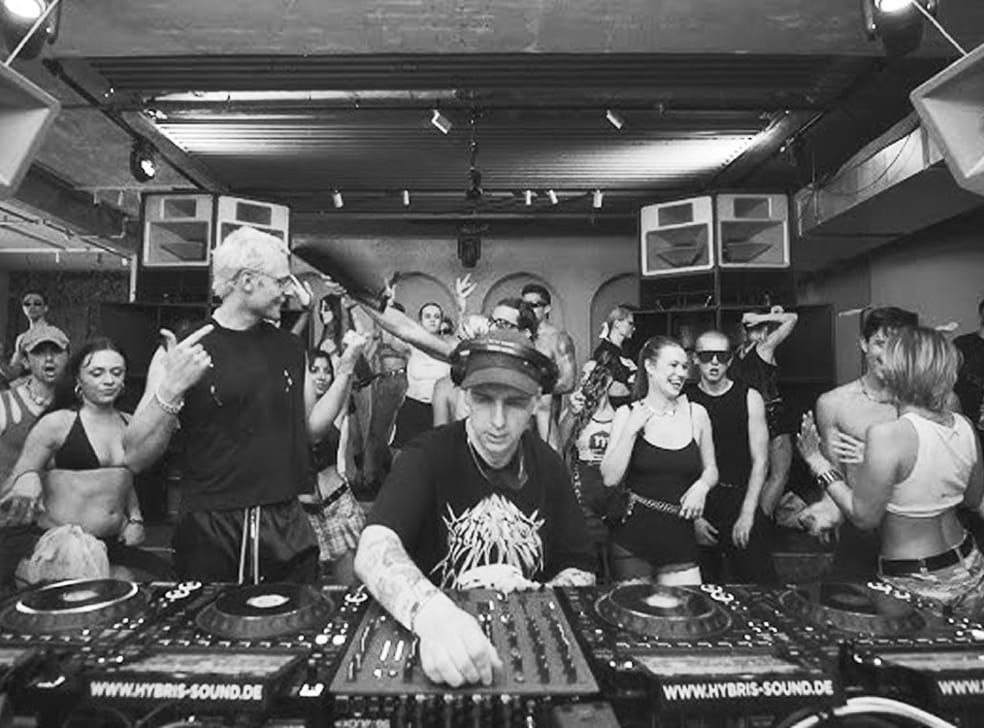
Techno is a genre based in collision. There's something in the air that producers pick up on. An invisible tension that permeates through artists and drives them to create music that reflects the world around them.
In the 1980s techno was a reflection of the decline of Detroit. As industry left the city, infrastructure started to crumble, and producers yearned for a future that looked brighter than the city decaying around them.
They found that future for themselves by creating a sonic world based in mechanical groove. Borrowing heavily from Kraftwerk, and funk music. Techno became the soundtrack of resistance for a generation of young people.
It's because of that radical origin that techno and its subgenres have remained an underground staple for nearly 40 years. Every decade has seen a resurgence and permutation of the form, bringing its own twists on the genre and reacting to the context of its time.
The 90s focused on freedom of expression, the 2000's became more and more minimal, the 10's were a reclamation of the genre's roots.
And now in the 2020s things are getting more chaotic.
Hard Techno has emerged as the eminent genre of the decade. Adopting the aesthetics of faster genres (namely trance and hardcore), and combining it with the restraint and form of traditional techno to create some of the most exciting music coming out right now.
We've been listening to so much of it that we wanted to show you how you can experiment with the genre in your own productions. Let's get started!
Kick and Bass
The kick and bass (sometimes called rumble) are the foundations of your track. Techno of any genre revolves around the economy of your musical materials. In a techno song your transitions and the addition of new instrumental parts happens slowly over time. That's what makes their presence and their absence so impactful.
In this example we're using the Subterranean Kick and Basement Bounce patches in Current to create our initial groove. Notice as you bob your head to the music that the bass and the kick complement each other creating a seamless pulse for your track. This is the pulse that the listener will lock onto.

With our Subterranean Kick we wanted to add a little more heft to the sound while still maintaining the clarity of the drum's top end. We accomplished this (pictured in the chain above) by subtly adding layers of distortion and saturation to add color. We accomplished this primarily through Rift, and the Black Box Saturator.
If you're wondering why we used multiple layers of processing instead of doing all of it in Rift, that's a great question. I'll tell you the answer through a simple analogy. Production can be a lot like cooking. If you have a dish that needs spice, you're not going to dump a bunch of salt on it and call it a day. By tasting the food and adding small amounts of multiple spices you're creating a rich palette that accentuates all the natural flavors of your ingredients while supplementing any areas that may be lacking. We're doing the same thing with our kicks.
By adding small tastes of different distortion, saturation and coloration to the kick, we're creating a solid full-bodied foundation for our entire track. It's important to remember that the energy of the track will ultimately be decided by the presence of your kick, so it's important to take the time to craft something you want to hear over and over again.
Percussion
Next we'll talk about our percussion. This is a more complicated section built from the interplay of many different loops and samples, so we'll focus less on the granular detail of their patterns and more on the ebb and flow of their arrangement.
As you listen you'll hear how the sounds morph and respond to each other. This is a compositional technique derived from drum machines. It's important to remember that all genres are tied to the instruments they originated on and techno is no exception. Almost every classic early techno song is at its core a hardware jam. DAWs were not as prevalent as they are now and because of that people didn't have the same access to those tools. Even some of the most pioneering artists of the genre created their early hits with a drum machine, some synths and a mixer.
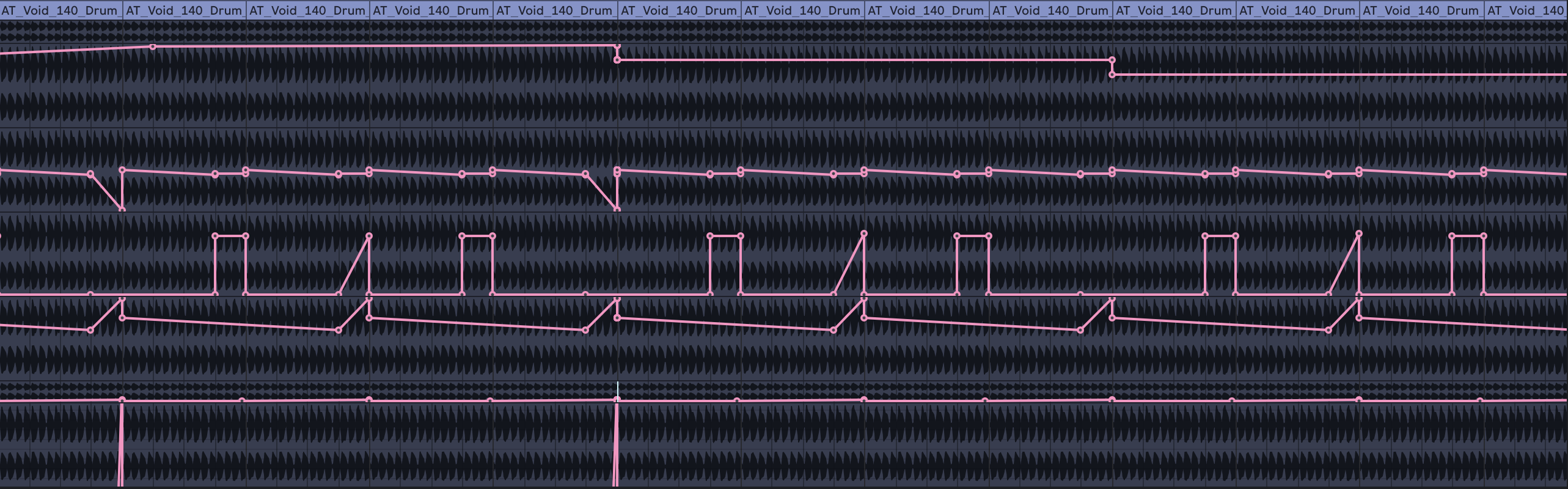
So how does that translate to the DAW focused digital production era we're in now? Automation. As pictured above we can use automation to recreate the live performance feel of techno. Instruments morph and move in response to each other to build tension, and then other parts of the track meet the percussion to release it. This constant building of tension and release is the essence of techno's form, and will help you create the drama of the composition.
Vocals
While not a compositional necessity, most hard techno features the prominent use of vocals. Whether used as an aesthetic tool to ground the listener in the song's world, or just cause it sounds cool. The addition of a dark rich vocal can elevate your track.
For this song we used a combination of Evoke, and Cluster Delay to add to the hypnotic atmosphere of the bass and the synths. As you listen to the vocals you'll find they build with the track, creating a through-line to the song's turnaround. This is a powerful compositional tool because you're subconsciously telling the listener where you are in your song. Which is important because you as an artist now have the compositional choice to set up and either meet the listener's expectations, or subvert them.
Hypnotic Synths
Now finally let's take a look at our synths. This is where all our melody comes from and they can be the trickiest part to create in a hard techno track.
Hard techno is a fast genre. The higher bpm allows the music to be more impactful in a lot of ways, but that also means things can get muddy very fast. In this example we keep our synth lines very minimal. They punctuate our grooves, but they don't steal the show. These are more supportive elements that allow the rest of the track to take center stage.
That isn't to say they're without substance. Like most techno songs the devil is in the details. In the above example listen to how we use Current and Rift to subtly morph and evolve our lead lines. They come in filtered and as we open our cutoff we hear them contrast and move with the rest of the track. This creates the atmosphere that gives our track a more hypnotic evolving aesthetic.
Final Result
This is where it all comes together. Listen along and see how all the points we've been talking about coalesce into something greater than the sum of its parts. The slow building of tension, the use of automation to animate the percussion. The way the synths and vocals invite you into the world, and the way the kick and bass keep you there. This energy, that builds and builds from one part of the track to the next. That's what hard techno is all about.
When we set out to make this tutorial we used primarily Current if you'd like to check out the synth we have the Universal Bundle live now during our Anniversary Sale. Inside the bundle you'll find everything we used to make the kick, bass, and synths for this track.
Don't have Current? Checkout the Current Universal Bundle