

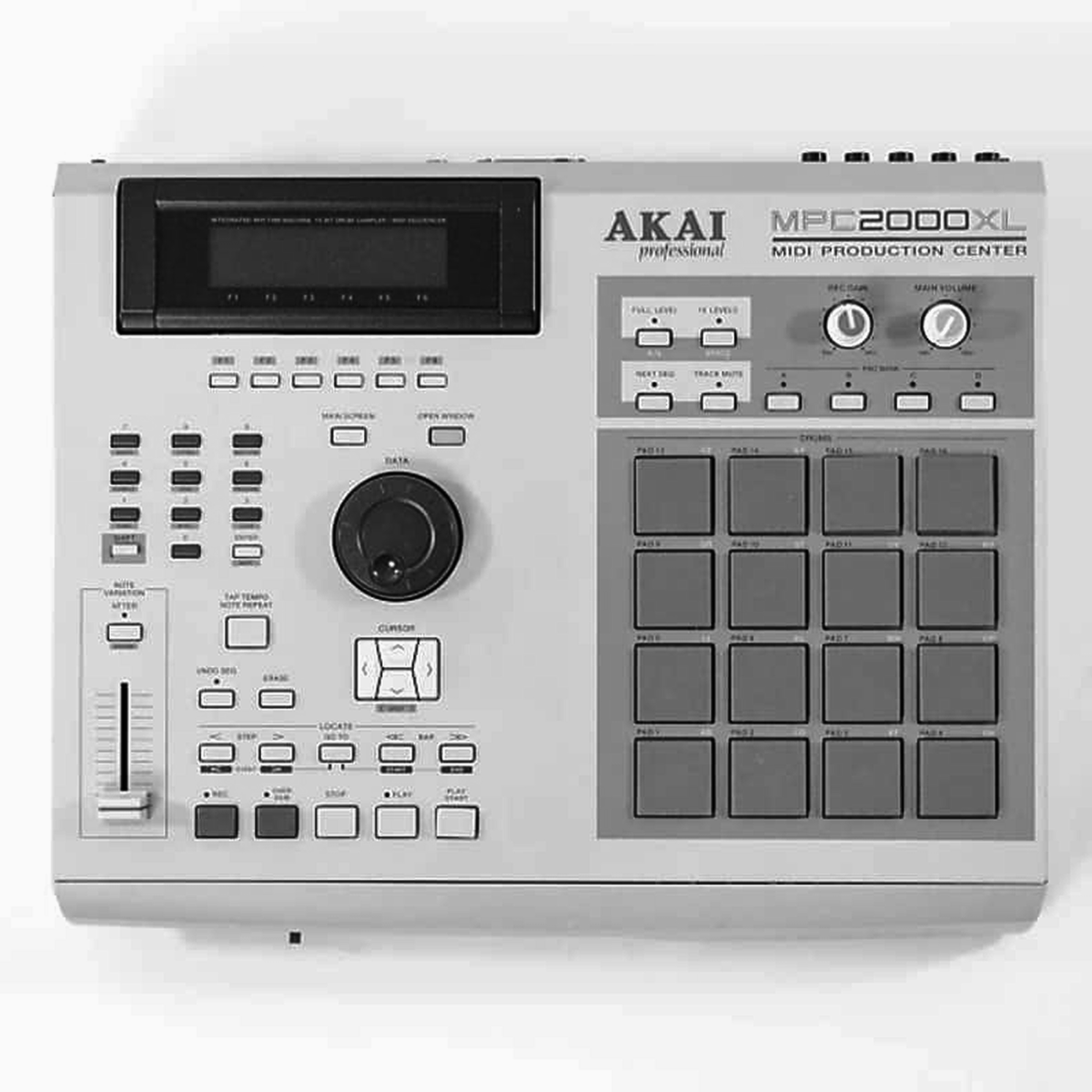
Hip-hop is arguably the most important genre of the last 50 years. No other musical form has had the same kind of cultural ubiquity and impact as rap music.
Maybe it's the music's documentarian nature: stories told by real people about their lives. Maybe it's a clever combination of melody and rhythm, but very few other art forms touch hip-hop's ability to invite the listener to inhabit a world they may be unfamiliar with.
In the late '70s, that world was New York City. New York was one of the first major metropolitan areas in America to suffer steep socioeconomic decline due to deindustrialization (an event that would become fairly routine in the second half of the 20th century).
People were out of work and living in brutal poverty. The city became a pressure cooker for hundreds of thousands of kids looking for a way out of their circumstance.
For a lot of those kids, that way out was music. What initially started as a party-specific genre to help propel the dance floor; rap was transformed in-part by Grandmaster Flash and the Furious Five's "The Message," which proved hip-hop could also exist as a vehicle for social commentary.
And there lies the magic of hip-hop: the push and pull of aspiration and circumstance that helped to transform the music into the overwhelming cultural force we know today. Like almost no other genre, rap can exist as both an escape from and a vehicle to confront the grounded reality that gave birth to the genre.
And that unique ability to inhabit both worlds is what we're examining today with our latest tutorial.
In the 2020s, we've seen the rise of many different genres of rap music, but one of the most interesting resurgences we've seen is the reexamination of lo-fi hip-hop.
Initially, an outsider genre reacting to the cleaner production and larger-than-life aesthetics of the 2000s (think bling era) lo-fi hip-hop was an attempt to reclaim the music's grounded roots.
A larger emphasis was put on sampling and keeping the "dust" of the sourced material present in the composition.
What has set lo-fi hip-hop apart in the 2020s however, is its untethering from vocals. The genre now exists as almost entirely instrumental, meant to convey tone and mood rather than direct storytelling.
We find this latest iteration fascinating, so we decided to create a tutorial with a little help from The Modulation FX Bundle to help you incorporate the genre into your own music.
Let's get started!
Using Samples and Synths to Create Atmospheric Melody
The musical core of hip-hop is sampling. Though not every subgenre of rap music features the technique, the processes used to reinterpret previously recorded material into a new musical idea are foundational to the composition's form and structure.
In the example above, we're using a soul sample in E minor and then reinforcing the sample's key with chords coming from an instance of Current with the Blue Hue preset selected.
As you listen, you'll notice the sample has an interesting motif but is a little sparse in tonal information. That's where our chords come in.
Keeping the chords to a simple ii–V–i progression in the key of E minor helps anchor the sample to the song's tonal center, making the sample work more seamlessly as we add in the rest of our instruments.
This melodic idea will be our musical foundation for the entire piece. If that seems simple, I invite you to recall some of the conversation we were having in our last tutorial.
In all groove-based music, the economy of your materials is your most prevalent compositional concern. Learning what is important as the foundational layer for your listener to hold onto is as important as making the piece itself.
In this song, that responsibility is taken by our melody.

Now that we've gotten the musical foundation of the piece down, you may find that the chords and sample sound a little unrelated to each other. That's where the magic of our lo-fi warble comes in.
Using an instance of Flex Chorus, we can create the lo-fi texture/warble by setting a low modulation rate of 2 bars synced to your timeline and a depth of 40%.
This creates that slow-shifting tonal feel you get from vintage media. If you'd like to throw a little more dirt into the mix, you can use Rift with light drive and the retro noise selected to recreate some of the dust and grime you'll find on a vinyl record.
Layering Drums
In lo-fi hip-hop, the drums are easily our second most important section. In a song like this, we'll be pulling from classic boom-bap-era programming and sampling.
What's important to remember here is that the secret for these kinds of sections is the use of layering.
This means making many different samples and sounds work together by pulling what you like from each sample with creative processing like EQ and filtering, and then combining it all together to create one lush rhythmic section.
For instance, our 2 main drum break samples both feature kicks that conflict with the groove of the beat. By filtering the low-end out, we remove the kick sound present in each sample. This allows us to streamline our groove while letting the kick sample that I've chosen take center stage in the mix.
In the example above, I've divided our main drum bus into 3 subsections: our kick, our sampled drums or "Breaks," and then the "Kit" that we'll program ourselves.
In a song like this, we let samples with more musical material (in this case the breaks) define our groove. For these samples, it's a 2/4 early New York sound. We'll use the kit we program ourselves to reinforce that groove.
That means keeping our own programming relatively simple so that we can let the breaks shine.
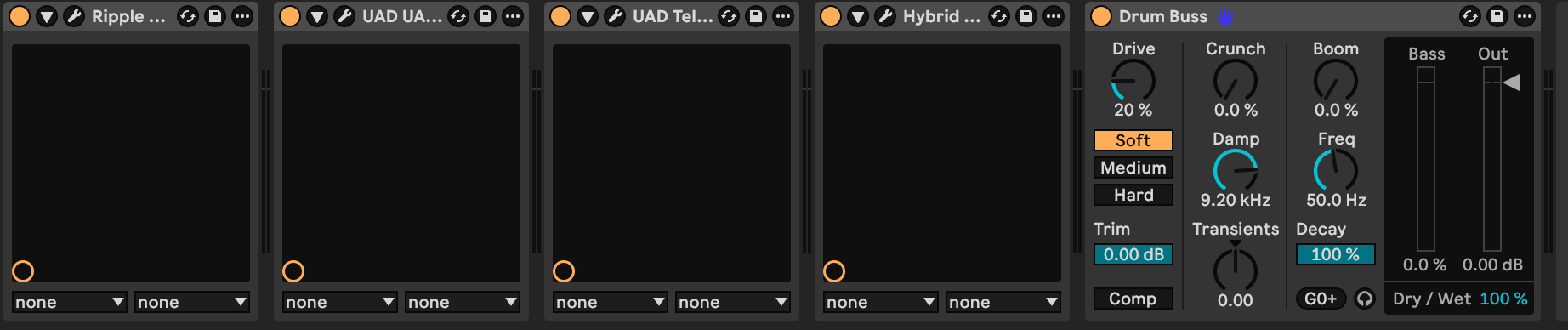
To help glue the sounds together, we'll use a combination of Ripple Phaser and 2 forms of compression: FET and optical.
We won't get into the minutiae of the differences between these two types of compressors. The important part to remember is that processing drums by first putting them through a FET-style compressor and then an optical one on gentle settings (we're talking 3 dB of gain reduction here) is a tried-and-true hack to make your drums punch through your mix.
Where the magic comes from, and what makes this sound unique, is the light use of Ripple Phaser to shade the sound with texture and movement.
The Bass
Now we come to our final instrumental part. Here, we'll use our bass to fill out our rhythm section and tie the drums together to our melody.
For this, we're using the bass preset "Factory Twist" in Current. I chose this patch since it's a relatively simple sound but fills the sub range nicely without getting in the way of the rest of our material.
One trick for creating a bass part in lo-fi hip-hop is to copy over your kick pattern and then realign the notes so that the bass follows the chord progression of your song.
In this case, we have the bass doubling the pattern of our kick while following the ii–V–i progression from our chords in the melodic section. It's important to note that we're primarily using the root notes of those chords. Sometimes, we have a small amount of variation, but that variation is only used to outline the other notes in the chord that's being sounded.
Keeping your bass clean and relatively simple is oftentimes the best way to make your sound have an impact in this kind of beat.
We've also added just a touch of Poly Flanger and distortion to give the bass a little more air and presence in the mix.
Final Result
This is where everything comes together. The magic of this kind of production for me is watching a track's parts coalesce into a song. The interplay of sampling and new material creates something musically new.
For this tutorial, we mostly used Current and The Modulation FX Bundle. If you'd like to give any sound a lo-fi warble, our new bundle is a great entry point. You can get Poly Flanger, Flex Chorus, and Ripple Phaser for $59.
Ready to try the Modulation FX Bundle for yourself?